
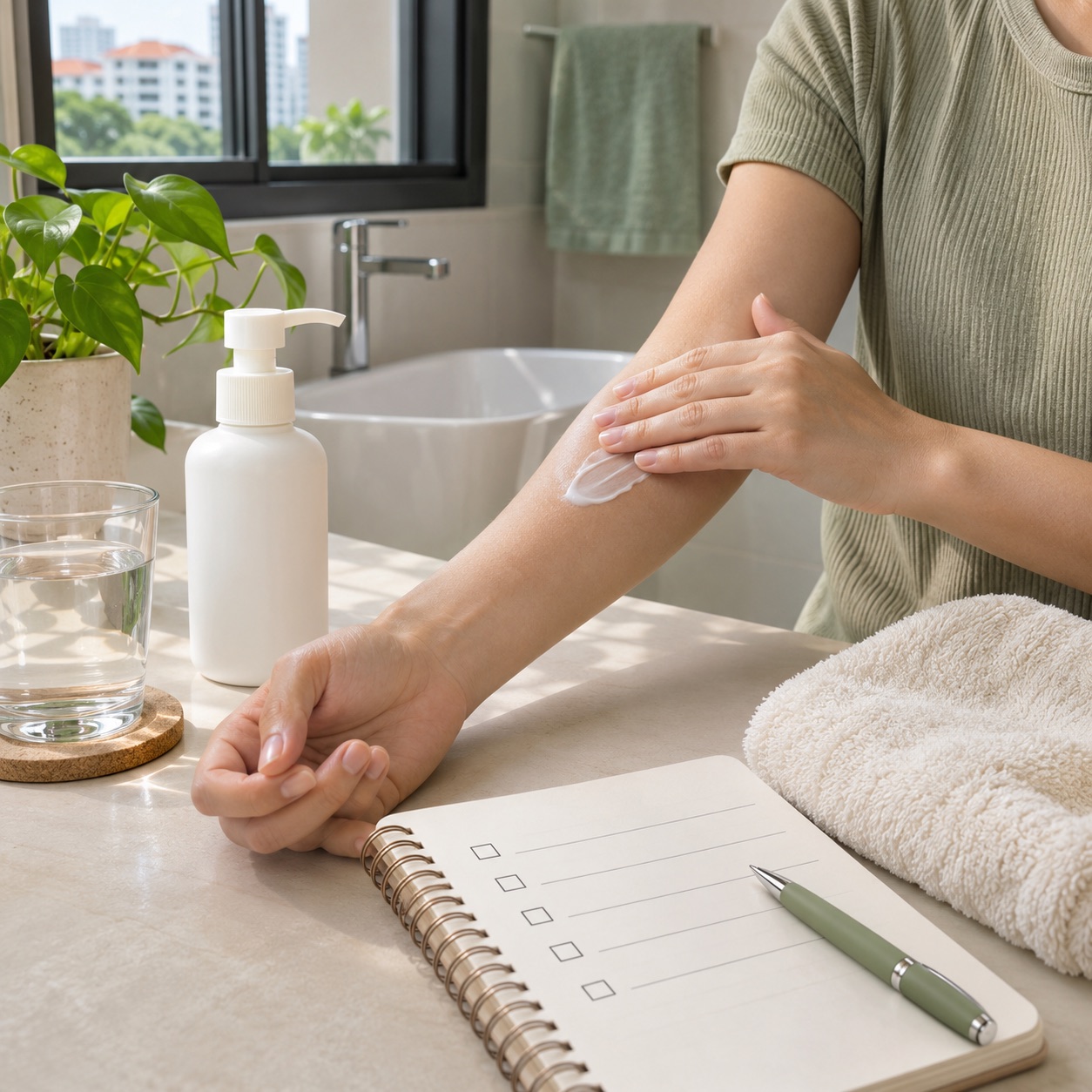
Dry, itchy or inflamed skin can be uncomfortable and distracting, especially when it affects sleep, work or school. Before trying another cream or attending a consultation, it helps to record what has changed and what you have already used.
This guide offers a practical checklist for adults and parents in Singapore. It does not diagnose the cause of a rash, and it does not replace advice from a doctor, dermatologist or pharmacist.
“Eczema” describes a group of inflammatory skin conditions. Atopic eczema is common, but contact dermatitis, seborrhoeic eczema and other skin conditions can look or feel different. Common features include itch, dry or flaky skin, redness, swelling and, during a more severe flare, oozing, crusting or bleeding.
Because several conditions can resemble eczema, a new, persistent or worsening rash deserves appropriate medical assessment rather than self-diagnosis from photographs or online advice.
A short record can help a healthcare professional understand the pattern without relying only on how the skin looks on one particular day.
Record:
If the appearance changes, take clear photographs in similar lighting. Do not photograph or share identifiable areas unless you are comfortable doing so.
Write down or photograph the labels of:
Include how often each product is used and when it was started. Do not stop or change prescribed treatment without discussing it with the prescribing clinician.
Useful observations include recent changes in:
Avoid starting a restrictive diet solely on the basis of an eczema flare. If a food allergy is suspected, seek assessment from a clinician experienced in allergy rather than removing major food groups without guidance.
Singapore’s HealthHub eczema guidance advises regular use of fragrance-free moisturiser and gentle, lukewarm showers. Moisturiser is generally most useful when applied consistently, including after bathing. A doctor or pharmacist can advise whether a topical medicine is appropriate and how it should be used.
Health Sciences Authority (HSA) warnings are also relevant when choosing products. HSA has found skin products from dubious or unknown sources that were marketed with claims such as “natural”, “steroid-free” or fast-acting, but contained undeclared potent ingredients. Purchase health products from reputable sellers and be cautious of quick, miraculous or “no side effects” claims.
If you have used an unfamiliar cream for several weeks and are concerned that it may contain a potent medicine, consult a doctor promptly. Do not make abrupt changes on your own when a clinician has advised continued or supervised use.
In a traditional Chinese medicine consultation, a registered TCM physician may ask about the skin symptoms together with sleep, stress, appetite, digestion and other concerns as part of a traditional assessment framework. This framework is different from a biomedical diagnosis.
A TCM consultation should not delay medical assessment for infection, a severe flare or an uncertain diagnosis. Bring your current medical plan, medication list and product photographs. Tell both your doctor and TCM physician about all medicines, supplements and herbal products so that the overall plan can be reviewed more safely.
No TCM approach should be presented as a guaranteed cure for eczema. Suitability varies, and established dermatological care remains important.
HealthHub advises seeing a doctor when eczema does not improve after one to two weeks of self-care, becomes worse, or significantly affects sleep, mood or daily life.
Seek prompt medical assessment for possible infection, including:
Babies, children, older adults, pregnant people and anyone with significant medical conditions need additional caution with medicines and unverified products. Ask a doctor or pharmacist before applying a new medicated product.
Eczema can be recurrent, and no treatment should be advertised as a guaranteed cure. TCM may be discussed as complementary care after an individual assessment, but it should not replace diagnosis, prescribed treatment or necessary dermatology care.
Do not change a prescribed medicine without speaking to the prescribing doctor or pharmacist. The appropriate strength, area of use and duration matter. If a cream came from an unknown source or its ingredients are unclear, bring the product or photographs to a healthcare professional for review.
Not automatically. Eczema does not prove that a food allergy is present. Unsupervised elimination diets can cause nutritional problems, particularly in children. Seek appropriate allergy or dietetic advice when a food-related reaction is suspected.
Yes, as a record for discussion, but a child’s treatment plan should be guided by an appropriate healthcare professional. Children are more vulnerable to adverse effects from potent or undeclared ingredients in skin products.
If you are considering a TCM consultation, contact Annie Tiang TCM to ask which location and physician may be appropriate. Bring your seven-day record, photographs, medication list and any relevant medical reports. Necessary medical or dermatology care should not be delayed, and treatment outcomes cannot be guaranteed.
General health information only: This article does not provide a diagnosis, personalised prescription or emergency advice. Seek prompt medical care for infection signs, severe or rapidly worsening symptoms, or concerns about a product you have used.


East Coast Road:
Monday to Sunday 9:00 AM–6:00 PM
Haig Road Branch:
Monday to Sunday 9:00 AM–6:00 PM