Trying to conceive can bring many questions, especially when appointments, test reports, supplements and different forms of care begin to overlap. Preparing a short record before a consultation can help you explain your situation clearly and identify questions that need medical follow-up.
Fertility concerns may involve either partner or both partners. A Traditional Chinese Medicine consultation should not replace or delay an appropriate medical fertility assessment.
As a general guide, seek medical advice if pregnancy has not occurred after:
It may be appropriate to seek advice earlier if either partner has a known reproductive or medical condition. Examples include irregular or absent menstrual periods, very painful periods, previous reproductive surgery, recurrent pregnancy loss, past sexually transmitted infections, cancer treatment, testicular symptoms or difficulties with sexual function.
Age, medical history and individual circumstances matter. You do not need to wait for the usual time threshold if something is concerning you.
Prepare a brief note covering:
A calendar or cycle-tracking application may help, but it does not need to be perfect. A simple, honest record is more useful than trying to reconstruct every detail during the appointment.
If available, bring copies or photographs of relevant reports, such as:
Fertility assessment often involves both partners. Even when one person has an existing diagnosis, it can still be helpful to consider the health history of the couple together.
List all products currently being used by either partner, including:
Include the product name, amount and how often it is taken, if known. Photographs of the packaging can be helpful.
Chinese medicines and supplements can interact with conventional medicines. Do not stop prescribed treatment or begin a new herbal product without discussing it with the relevant qualified healthcare professionals. Extra care is needed during fertility treatment, pregnancy, breastfeeding and when managing a chronic condition.
Preconception care is not limited to fertility treatment. It also includes reviewing general health before pregnancy.
KK Women’s and Children’s Hospital advises taking folic acid from the time a person is trying to conceive until 12 weeks of pregnancy. Ask a doctor or pharmacist about the appropriate product and dose, especially if you have a medical condition or take regular medicines.
Other useful topics to discuss with a healthcare professional include:
Neither partner should be overlooked. Preconception health and fertility concerns can involve both people.
A TCM practitioner may ask about the menstrual cycle, sleep, digestion, appetite, stress, temperature preferences and other symptoms. These questions are used within a traditional TCM assessment framework.
A TCM pattern assessment is not the same as a biomedical fertility diagnosis. Medical investigations may still be needed to assess ovulation, reproductive anatomy, semen parameters or other possible causes.
Depending on the individual assessment, acupuncture or Chinese medicine may be discussed. Suitability, risks and the available evidence vary. No TCM treatment can guarantee conception or a particular pregnancy outcome.
Tell the practitioner if you are:
Coordinated care helps reduce avoidable interactions and misunderstandings.
Before agreeing to a plan, consider asking:
Be cautious of anyone promising pregnancy, guaranteed success or a fixed result.
After a missed period or positive pregnancy test, seek urgent medical assessment for symptoms such as:
These can be symptoms of an ectopic pregnancy or another urgent condition. Do not wait for a routine TCM appointment if these symptoms occur.
Good preparation does not need to be complicated. A one-page timeline, relevant reports and a complete list of medicines and supplements can make the first conversation more focused.
You can learn more about women’s health services at Annie Tiang TCM, view the Haig Road clinic or Katong and East Coast clinic.
If you would like to discuss whether a TCM consultation is appropriate alongside your existing care, you may request an appointment. Please bring any relevant medical information and tell the practitioner about current medicines or fertility treatment.
A traditional TCM assessment cannot replace a biomedical fertility evaluation. Medical assessment may involve both partners and may include blood tests, imaging, semen analysis or other investigations.
Yes. Fertility concerns can involve either partner or both partners. Medical history, medicines, lifestyle factors and existing test reports from both people may be relevant.
Do not self-start a herbal product during fertility treatment. Tell both the fertility team and TCM practitioner about every medicine and supplement so that suitability, timing and possible interactions can be reviewed.
Not always. People aged 35 or older are generally advised to seek medical advice after six months of trying. Earlier evaluation may also be appropriate when there are irregular periods, significant pain, known medical or reproductive conditions, previous operations or other concerns.
This article provides general health education and is not a diagnosis, prescription or substitute for individual medical advice. Seek appropriate medical or emergency care for concerning symptoms.

A poor night’s sleep from time to time is common. However, repeatedly having trouble falling asleep, waking often during the night or waking earlier than intended may affect concentration, mood, energy and daily safety.
There is no single cause of insomnia. Stress, shift work, the sleeping environment, caffeine, alcohol, pain, itching, coughing, breathing problems, medicines and other health conditions can all affect sleep. A sleep diary cannot diagnose the cause, but it can help you describe the pattern more clearly when speaking with a healthcare professional.
Sleep difficulties may include:
Sleep needs differ between individuals. The number of hours alone does not determine whether someone has insomnia. The pattern, its duration and its effect on daytime functioning are also important.
Singapore healthcare sources recommend recording sleep patterns over several days. One to two weeks can provide a more useful picture than trying to remember a single night.
Estimates are sufficient. Watching the clock repeatedly may make some people feel more alert or anxious.
Bring an up-to-date medicine and supplement list to your consultation. Do not stop prescribed medicine solely because you suspect that it is affecting sleep; discuss this with the prescribing doctor or pharmacist.
General sleep habits that may be helpful include:
These steps are general education and are not a substitute for assessment when sleep problems persist. If you feel drowsy while driving, do not continue driving.
Consider consulting a doctor when sleep problems persist, recur frequently or interfere with work, relationships, mood or safety.
Medical assessment is especially important if you experience:
Thoughts of harming yourself or someone else require urgent professional or emergency help.
In traditional Chinese medicine, sleep is considered together with a person’s broader pattern of symptoms. A TCM physician may ask about the timing of sleep, night waking, dreams, appetite, digestion, stress, menstrual health and other concerns.
This traditional framework is not the same as a biomedical diagnosis. Depending on an individual assessment, acupuncture or Chinese medicine may be discussed, but suitability and responses vary. Modern evidence for different TCM interventions is also variable, and no outcome can be guaranteed.
Tell your TCM physician about all medicines and supplements you use. Extra caution is necessary during pregnancy, while trying to conceive, and when managing chronic medical conditions. TCM care should not replace necessary medical, sleep or mental-health assessment.
You can learn more about Annie Tiang TCM’s approach to traditional Chinese medicine, visit our Haig Road clinic or Katong / East Coast clinic.
If you would like to discuss your sleep pattern as part of an individual TCM consultation, you may request an appointment online. Please bring your sleep diary and current medicine and supplement list.
No. Sleep needs vary. A healthcare professional will also consider the sleep pattern, how long it has continued and whether it affects daytime function.
One to two weeks is often a practical starting point. Continue for longer only if advised by your healthcare professional.
Avoid self-prescribing, particularly if you take other medicines, are pregnant or are trying to conceive. Ask a doctor or pharmacist about melatonin and discuss Chinese medicine with a registered TCM physician after disclosing your medicines and medical conditions.
No. TCM consultation does not replace medical evaluation, particularly when symptoms suggest sleep apnoea, a medicine-related problem, a mental-health concern or a safety risk.
This article provides general health education and does not provide a diagnosis or personalised treatment advice. Treatment suitability and responses vary. Seek appropriate medical attention for persistent, severe or concerning symptoms.
Does your shoulder hurt when you put a bag on a high shelf, hang up laundry or reach into an overhead cupboard? The movements that bring on your pain can help a clinician understand your symptoms. Several shoulder conditions can feel similar, so the movement alone cannot tell you the cause.
For a few days, note which arm hurts, whether it began after a fall or a change in activity, and whether it hurts more when you lift an object or when you reach with an empty hand. Mention any stiffness or loss of strength and whether pain is disturbing your sleep.
Move frequently used items to a lower shelf and keep loads close to your body. Reduce repeated overhead lifting that aggravates the pain. Keep the shoulder moving gently within a comfortable range as you go about your day. A warm or cold pack wrapped in a towel may help with comfort.
See a GP if the pain worsens, has not started improving after about two weeks, or makes it very difficult to move your arm. Seek urgent medical care if the pain starts after an injury, is sudden and severe, or comes with an inability to move the arm, marked swelling, persistent numbness or fever.
Source: NHS guidance on shoulder pain.

Period cramps can vary from one cycle to another. The medical term for painful periods is dysmenorrhoea, but the symptom pattern alone cannot show whether the pain is primary or linked to another condition. When cramps change, interrupt work or sleep, or occur with unusual bleeding, a short record can make a medical consultation more useful.

Do you experience lower back stiffness after spending long hours at your desk?
For many working adults in Singapore, prolonged sitting, limited movement and repetitive daily activities may contribute to back discomfort.
Understanding your symptoms and making small changes to your routine can help you make informed decisions about your back health.
Lower back discomfort may be associated with muscle strain, prolonged inactivity, repetitive lifting or other musculoskeletal conditions.
However, pain does not always have a single cause. Your symptoms, medical history and physical function are important when determining whether further assessment is needed.
Consult a doctor if your discomfort persists, worsens or interferes with everyday activities.
Seek urgent medical attention if back pain is accompanied by new bladder or bowel problems, numbness around the groin, progressive leg weakness or symptoms following significant trauma.
At Annie Tiang TCM, our practitioners provide individualised Traditional Chinese Medicine consultations.
Depending on your medical history, assessment and suitability, available services may include acupuncture, tuina or other appropriate TCM approaches.
Treatment suitability and individual responses vary. TCM services should not delay necessary medical assessment or urgent care.
Our clinics are located in Katong and Haig Road, Singapore.
Learn more about our Pain & Mobility Services and Acupuncture Services.
To enquire about a consultation, contact Annie Tiang TCM or visit www.annietiang.com.
HealthHub Singapore: Low Back Pain
General health education only. This article does not provide a personal diagnosis or prescription. Seek qualified medical care for concerning or worsening symptoms.
Hip discomfort can show up in different places: the groin, outer hip, buttock or upper thigh. It may feel worse when walking, climbing stairs, sitting for a long time or lying on one side. The location and pattern are useful information, but they do not identify the cause by themselves.
Notice the pattern before you seek care
For a few days, note when the discomfort begins, what activity preceded it and whether it changes with rest or gentle movement. Also note stiffness after sitting or waking, pain at night, swelling, bruising, clicking, or difficulty putting on socks and shoes. A recent fall, sudden increase in exercise, long periods of standing or a change in footwear may be relevant. Pain felt around the hip can sometimes overlap with lower-back or leg symptoms, so describe the whole area rather than pointing to one spot only.
Everyday adjustments may reduce strain
If movement is comfortable, keep daily activity manageable instead of staying in bed for long periods. Reduce the task that clearly aggravates symptoms, then return gradually as comfort allows. Take short breaks from prolonged sitting, avoid repeatedly carrying heavy loads for now and choose a stable, comfortable chair. When side-lying is uncomfortable, a pillow between the knees may make the position easier. Do not force stretches or exercises that create new or increasing pain.
HealthHub Singapore explains that hip pain treatment depends on the specific cause and lists situations that need medical advice. The NHS also advises assessment when pain affects sleep or normal activities, keeps returning or follows an injury.
When to seek urgent medical assessment
Seek urgent help after a fall or injury if you have severe pain, cannot put weight on the leg, or notice tingling or loss of feeling. Urgent assessment is also needed for sudden severe pain without an injury, a hot or swollen hip, skin colour changes, or hip pain with fever or feeling unwell.
How an individual consultation works
Bring a short symptom timeline, a list of activities that make the pain better or worse, and relevant medical reports or medicines. At Annie Tiang TCM, any care discussion follows an individual assessment and suitability review. Traditional Chinese medicine explanations are discussed as a traditional framework; they are not a substitute for medical diagnosis or emergency care. Treatment responses vary and no outcome is guaranteed.
For general appointment enquiries, contact Annie Tiang TCM on WhatsApp: +65 9734 3590.
Sources
HealthHub Singapore: https://www.healthhub.sg/health-conditions/hip_conditions_nuh
NHS: https://www.nhs.uk/symptoms/hip-pain/
General health education only. This article does not provide a personal diagnosis or prescription. Seek qualified medical care for concerning or worsening symptoms.
Wrist discomfort after typing, scrolling or repeated hand use can be easy to dismiss. The pattern, timing and effect on your grip are useful information to record before seeking care. A symptom pattern alone cannot identify the cause.
What to notice
Write down when the discomfort began and whether it followed a fall, twist or sudden increase in workload. Note whether it is felt at the wrist, thumb side, palm or fingers, and whether it is worse at night, during typing, while holding a phone or when opening a jar. Tingling, numbness, weakness or dropping objects are also important details. HealthHub notes that repetitive hand and wrist activities, including prolonged typing, can be relevant to wrist symptoms, but these observations do not replace an examination.
Review the task, not only the symptom
For a mild problem without warning signs, consider which tasks load the wrist repeatedly. Break up long periods of typing or scrolling, change position regularly and keep frequently used items within easy reach. Avoid repeatedly testing a painful grip or forcing a movement that causes new or increasing pain. After a recent injury, avoid heavy lifting and seek advice about appropriate support and activity. NHS guidance advises gentle movement for mild stiffness while reducing activities that aggravate the pain; medication or a splint should be discussed with a pharmacist or clinician when appropriate.
When to seek medical assessment
Arrange medical assessment if pain is worsening, keeps returning, interferes with normal activities or has not improved after a reasonable period of self-care. Tingling or loss of sensation, night symptoms that affect sleep, or difficulty gripping deserve attention. Seek urgent care after an injury if the wrist or hand is misshapen, severely swollen, changing colour, impossible to move, or associated with loss of feeling or power. A hot, red, swollen wrist with fever or feeling unwell also needs prompt medical review. Emergency care should not be delayed for a routine appointment.
Preparing for an individual consultation
Bring a short symptom timeline, a list of activities that make the problem better or worse, relevant medical reports and a current medication list. At Annie Tiang TCM, any traditional Chinese medicine or acupuncture discussion depends on an individual assessment and suitability. Treatment responses vary, and TCM does not replace necessary medical evaluation.
For general appointment enquiries, contact Annie Tiang TCM by WhatsApp: https://wa.me/6597343590
Sources
HealthHub: https://www.healthhub.sg/highlights-and-insights/expert-voices/your-medical-questions-answered-wrist-and-chronic-back-pain?sc_camp=92BD09F5EE6A45DEC5A69E51369C1DA0
HealthHub: https://www.healthhub.sg/well-being-and-lifestyle/personal-care/in-good-hands
NHS: https://www.nhs.uk/symptoms/hand-pain/wrist-pain/
General health education only. This article cannot diagnose wrist or hand pain or provide personal treatment advice.
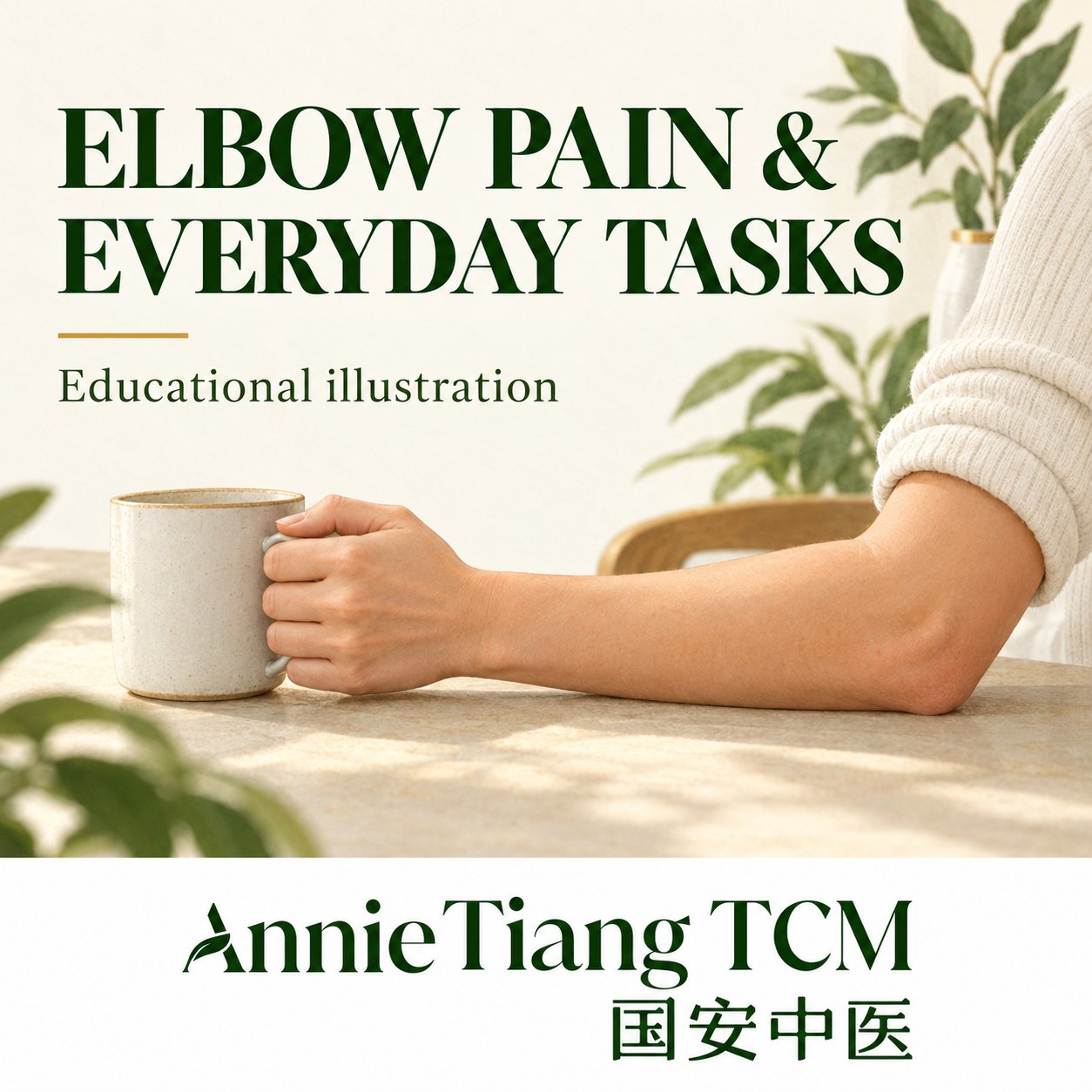
Opening containers, carrying shopping or using a mouse can make elbow discomfort hard to ignore. Reviewing a task means looking beyond the weight of an object: how often you grip, twist or lift also matters. This guide offers a practical way to discuss repeated tasks, without assuming that every sore elbow is tennis elbow.
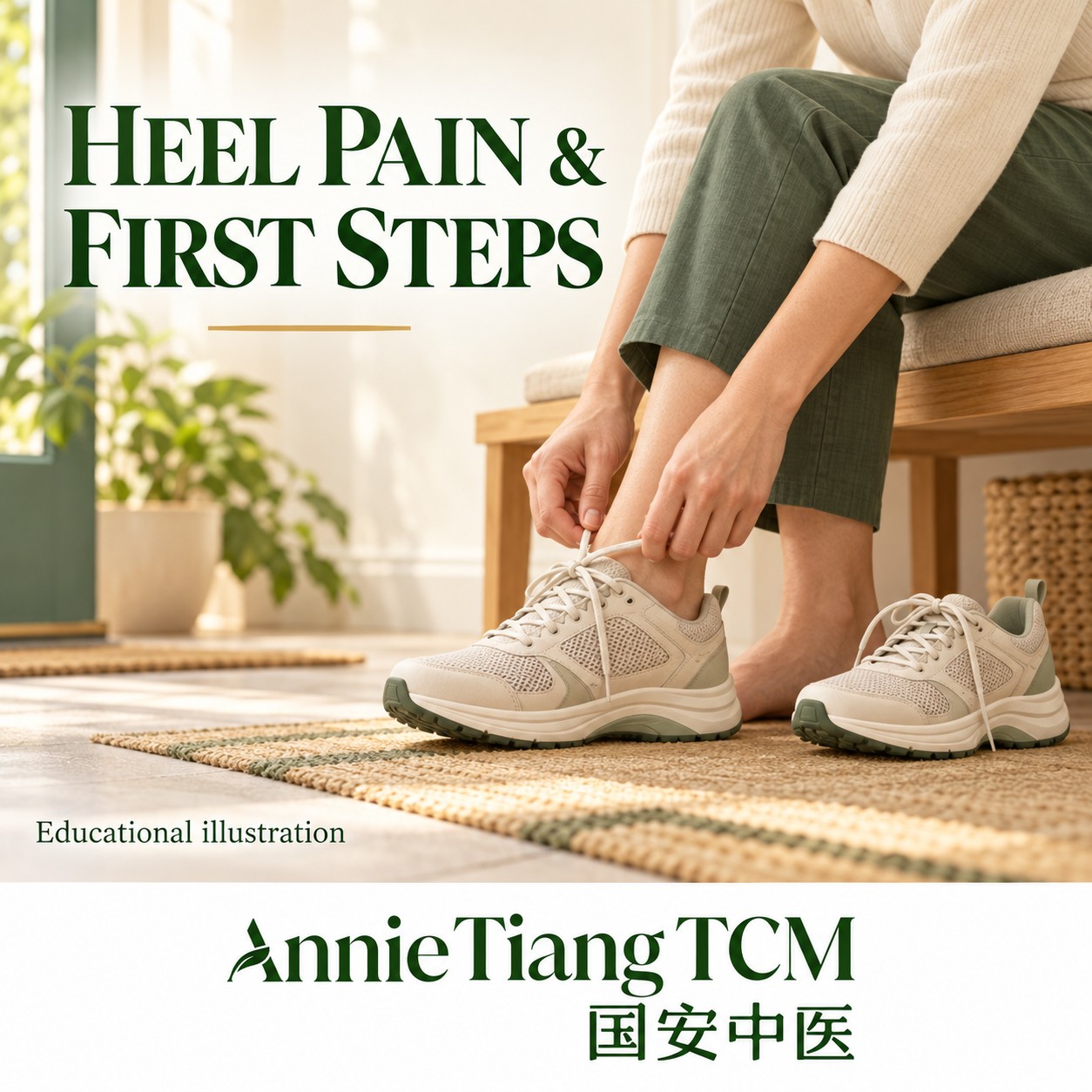
Heel discomfort during the first steps out of bed can make an ordinary morning difficult. Before changing shoes, buying an insert or starting exercises, check whether medical assessment is needed. This guide explains a practical footwear and activity review for everyday life in Singapore, without assuming that every sore heel has the same cause.


East Coast Road:
Monday to Sunday 9:00 AM–6:00 PM
Haig Road Branch:
Monday to Sunday 9:00 AM–6:00 PM