
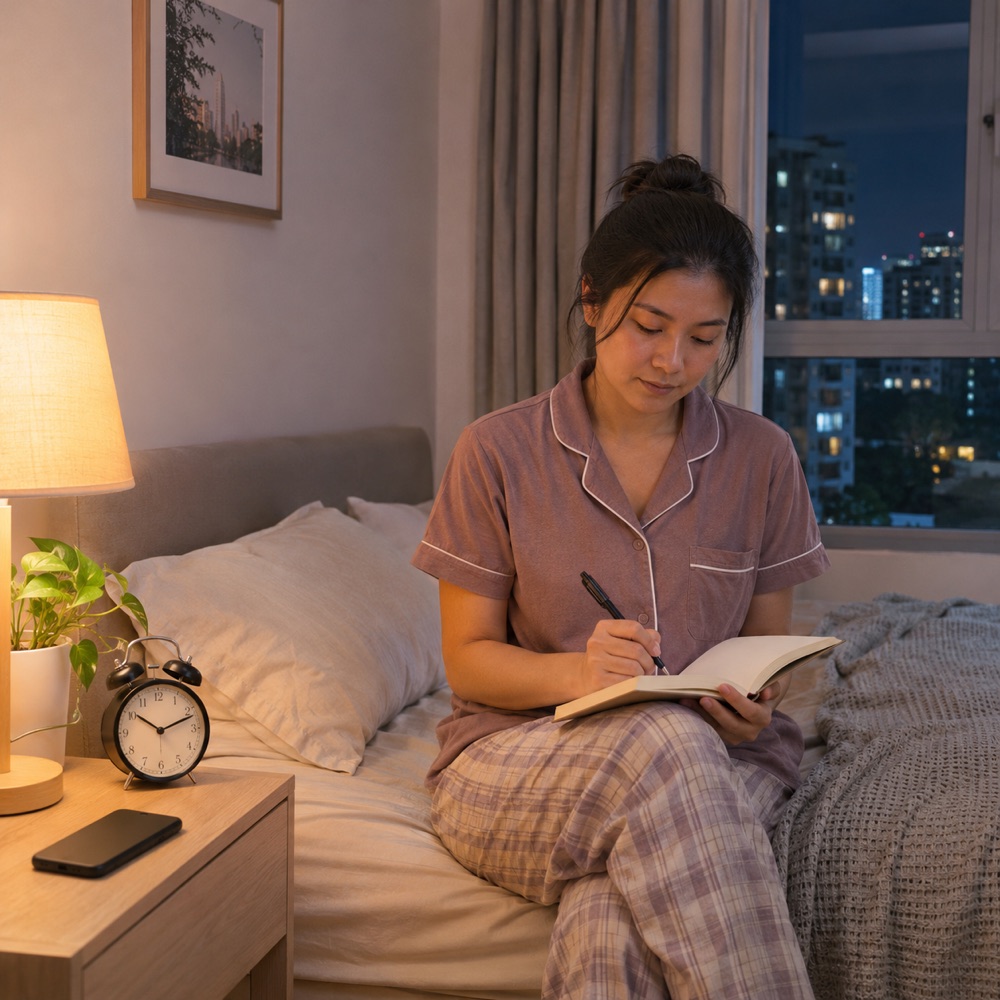
A poor night’s sleep from time to time is common. However, repeatedly having trouble falling asleep, waking often during the night or waking earlier than intended may affect concentration, mood, energy and daily safety.
There is no single cause of insomnia. Stress, shift work, the sleeping environment, caffeine, alcohol, pain, itching, coughing, breathing problems, medicines and other health conditions can all affect sleep. A sleep diary cannot diagnose the cause, but it can help you describe the pattern more clearly when speaking with a healthcare professional.
Sleep difficulties may include:
Sleep needs differ between individuals. The number of hours alone does not determine whether someone has insomnia. The pattern, its duration and its effect on daytime functioning are also important.
Singapore healthcare sources recommend recording sleep patterns over several days. One to two weeks can provide a more useful picture than trying to remember a single night.
Estimates are sufficient. Watching the clock repeatedly may make some people feel more alert or anxious.
Bring an up-to-date medicine and supplement list to your consultation. Do not stop prescribed medicine solely because you suspect that it is affecting sleep; discuss this with the prescribing doctor or pharmacist.
General sleep habits that may be helpful include:
These steps are general education and are not a substitute for assessment when sleep problems persist. If you feel drowsy while driving, do not continue driving.
Consider consulting a doctor when sleep problems persist, recur frequently or interfere with work, relationships, mood or safety.
Medical assessment is especially important if you experience:
Thoughts of harming yourself or someone else require urgent professional or emergency help.
In traditional Chinese medicine, sleep is considered together with a person’s broader pattern of symptoms. A TCM physician may ask about the timing of sleep, night waking, dreams, appetite, digestion, stress, menstrual health and other concerns.
This traditional framework is not the same as a biomedical diagnosis. Depending on an individual assessment, acupuncture or Chinese medicine may be discussed, but suitability and responses vary. Modern evidence for different TCM interventions is also variable, and no outcome can be guaranteed.
Tell your TCM physician about all medicines and supplements you use. Extra caution is necessary during pregnancy, while trying to conceive, and when managing chronic medical conditions. TCM care should not replace necessary medical, sleep or mental-health assessment.
You can learn more about Annie Tiang TCM’s approach to traditional Chinese medicine, visit our Haig Road clinic or Katong / East Coast clinic.
If you would like to discuss your sleep pattern as part of an individual TCM consultation, you may request an appointment online. Please bring your sleep diary and current medicine and supplement list.
No. Sleep needs vary. A healthcare professional will also consider the sleep pattern, how long it has continued and whether it affects daytime function.
One to two weeks is often a practical starting point. Continue for longer only if advised by your healthcare professional.
Avoid self-prescribing, particularly if you take other medicines, are pregnant or are trying to conceive. Ask a doctor or pharmacist about melatonin and discuss Chinese medicine with a registered TCM physician after disclosing your medicines and medical conditions.
No. TCM consultation does not replace medical evaluation, particularly when symptoms suggest sleep apnoea, a medicine-related problem, a mental-health concern or a safety risk.
This article provides general health education and does not provide a diagnosis or personalised treatment advice. Treatment suitability and responses vary. Seek appropriate medical attention for persistent, severe or concerning symptoms.


East Coast Road:
Monday to Sunday 9:00 AM–6:00 PM
Haig Road Branch:
Monday to Sunday 9:00 AM–6:00 PM