
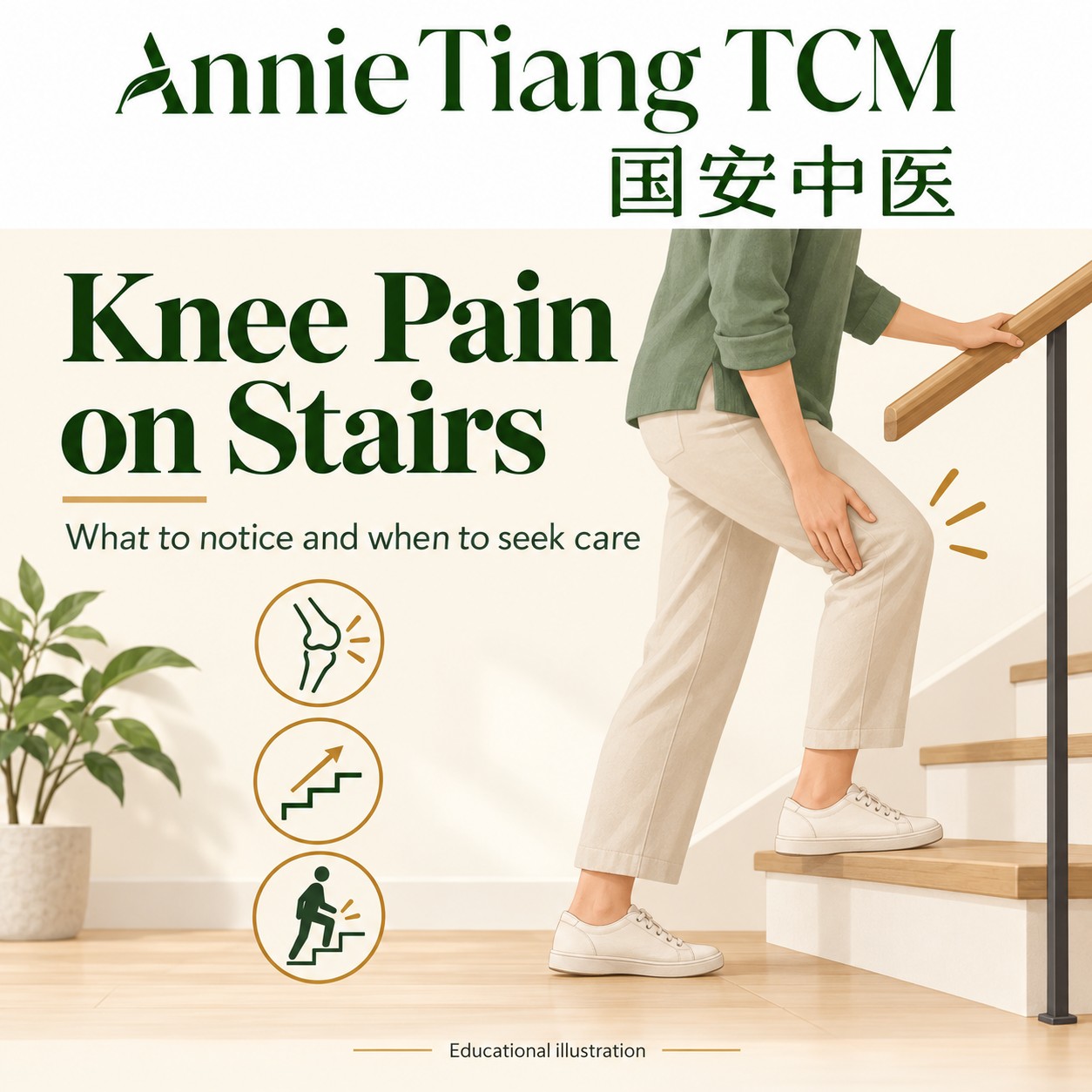
Knee discomfort on an MRT staircase, at home or while walking around Singapore can raise a simple question: should you change your activity or arrange an assessment? The pattern is useful to describe, but it cannot establish a diagnosis. This guide explains what to notice, reasonable activity adjustments and warning signs that need medical care.
Pain around the knee can have different explanations, including injuries and joint or tendon problems. HealthHub describes knee pain as a symptom, rather than a diagnosis. Having knee pain does not necessarily mean that osteoarthritis will develop. A painful staircase alone cannot tell you which structure is involved. Avoid diagnosing yourself from a diagram or social-media exercise video. HealthHub: Knee Pain.
Before a consultation, record a few concrete details instead of repeatedly climbing stairs to test the knee:
These observations help you explain the problem; they do not replace an examination.
Seek urgent medical assessment if the knee is very painful, cannot bear weight or move, becomes markedly swollen or changes shape. A knee that locks, gives way or painfully clicks also needs prompt advice. A hot, red knee with fever or feeling unwell needs urgent attention because infection is one possible explanation. Do not wait for a routine clinic appointment. Arrange a medical review if symptoms persist for a few weeks; seek earlier advice if they worsen. NHS: Knee pain.
If there are no warning signs, modify activities that aggravate symptoms rather than repeatedly pushing through them. Take breaks from demanding tasks and return to ordinary activity gradually. Keep movement within comfortable limits; a fixed online exercise routine is not suitable for everyone. If a movement causes new or increasing pain, stop and seek advice. HealthHub's general pain guidance recommends adapting activity and resting when needed. HealthHub: Self-Help Tips to Manage Pain.
Bring relevant medical reports and a current medication list. Useful questions include: Is medical investigation needed first? Which activities should I modify? What does the proposed care involve, what are its risks and alternatives, and when should we review the situation? Annie Tiang TCM provides individual TCM consultations. Care options, their limitations and any need for referral are discussed after an individual assessment. Responses vary, and TCM care must not delay necessary medical care. See our consultation information.
Katong / East Coast: 11 East Coast Road #01-01, The Odeon Katong, Singapore 428722.
Haig Road: 24A Haig Road, Singapore 438734.
Both clinics open Monday–Sunday, 9:00 AM–6:00 PM. Appointment enquiries: WhatsApp +65 9734 3590.
General health information only; not a diagnosis, individual exercise prescription or treatment recommendation. Sources checked on 25 October 2026. Illustration is AI-generated and does not show a real patient.


East Coast Road:
Monday to Sunday 9:00 AM–6:00 PM
Haig Road Branch:
Monday to Sunday 9:00 AM–6:00 PM