
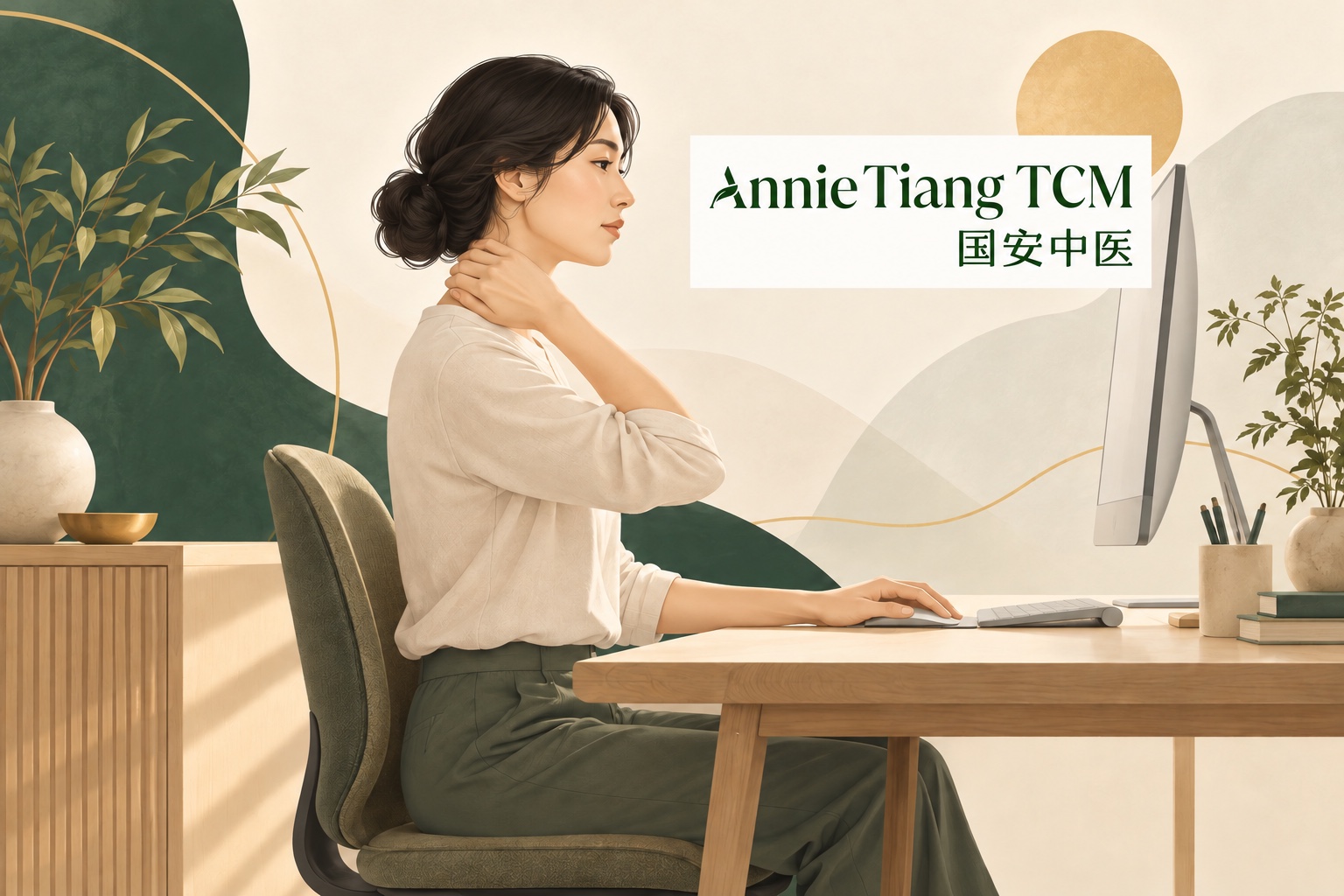
Neck pain may feel like stiffness, aching or discomfort when turning your head. The cause is not always obvious, and similar symptoms can have different explanations. This guide covers common causes, signs that need medical assessment, and what an individual TCM consultation at Annie Tiang TCM in Singapore may involve.
Muscle strain, staying in one position for a long time, and an awkward sleeping position can contribute to neck discomfort. Pain may also follow an injury, such as a fall or whiplash. Age-related changes in the neck joints and discs, or irritation of a nerve, are other possible explanations. Nerve irritation may be accompanied by pain travelling into an arm, tingling or numbness.
Sleep, stress and changes in activity can influence how pain feels. A description such as “desk-related pain” does not establish a diagnosis. An assessment considers how symptoms began, their pattern and any associated changes.
Go to an emergency department promptly for neck pain after a significant accident, or if you develop new or worsening arm or leg weakness, difficulty walking or balancing, loss of hand coordination, or changes in bladder or bowel control. Sudden neck pain accompanied by a severe headache, fainting, facial weakness, double vision, or difficulty speaking or swallowing also needs urgent assessment. Do not wait for a routine TCM appointment.
Seek prompt medical advice if neck pain occurs with fever, feeling generally unwell, unexplained weight loss or a history of cancer. New or persistent arm tingling, numbness or a cold arm also warrants prompt medical advice. Arrange a medical review if pain persists for a few weeks or repeatedly disrupts sleep or daily activities. Worsening symptoms warrant earlier review.
A consultation is an opportunity to discuss where the discomfort occurs, how long it has been present, previous injuries, medical conditions and medicines. Bring relevant reports and a current medication list. Assessment should determine whether TCM care is suitable and whether medical evaluation or referral is needed first.
Personal goals might include turning the head comfortably, tolerating work tasks or sleeping more comfortably. The care plan and review arrangements should reflect the individual assessment, preferences and response, rather than a fixed number of sessions for everyone.
Annie Tiang TCM provides TCM consultations, acupuncture and tuina services. For a person seeking a consultation about neck discomfort, suitability is assessed individually.
Tell the practitioner about pregnancy, blood-thinning medicines, bleeding disorders, skin infections and other relevant medical conditions. Acupuncture and manual care can have side effects, and risks should be discussed. Responses vary; no particular outcome or recovery time can be guaranteed. TCM care does not replace necessary medical investigation, prescribed medicines or rehabilitation.
If there are no warning signs and movement is comfortable, avoid staying in one position for long periods and take brief movement breaks. Adjust your screen and work setup to reduce sustained awkward positioning. Gentle, comfortable neck movement may be preferable to prolonged complete rest. Stop any activity that worsens symptoms or brings on numbness, weakness or dizziness, and seek advice. Avoid driving if you cannot turn your head safely.
Katong / East Coast: 11 East Coast Road #01-01, The Odeon Katong, Singapore 428722.
Haig Road: 24A Haig Road, Singapore 438734.
Both clinics are open Monday to Sunday, 9:00 AM–6:00 PM.
For appointment availability, contact WhatsApp +65 9734 3590 with your preferred branch and time. You can also read about our acupuncture services or check our contact details.
This article provides general health information and does not diagnose symptoms or provide an individual treatment recommendation.


East Coast Road:
Monday to Sunday 9:00 AM–6:00 PM
Haig Road Branch:
Monday to Sunday 9:00 AM–6:00 PM